
Carroll County Arrest Warrants Explained
An arrest warrant is a judge's written order commanding an arrest. Under Indiana Code Title 35, the whole process rests on probable cause: facts strong enough to support a reasonable belief that an offense happened and that the named person committed it. Charging papers, an affidavit, the judicial finding, and later docket entries tell the story of a particular Carroll County case. Carroll Circuit Court serves as the county's main criminal venue under current local rules, handling murder, felonies, misdemeanors, infractions, ordinance violations, red-flag matters, mental-health matters, and protection orders. Carroll Superior Court, by contrast, focuses on juvenile, family, probate, and civil work. Jurisdiction does not open every file, though. Sealed, expunged, juvenile, protected, or otherwise confidential cases may never surface in a Carroll County warrant search, no matter which court supervises them.
Carroll Probable-Cause Record Trail
A Carroll County warrant search works best case by case. The official Indiana warrant FAQ notes that a warrant can appear in the case summary when the criminal case is public. It also says plainly that Indiana has no website for searching arrest warrants statewide. Open MyCase and pull up the eligible case. Read the summary and the chronological docket together. A cause number gives the strongest match; with only a name, the official search tips and a filter by court will narrow the field. Write down the court and the cause number, and never treat a matching name alone as proof of identity. MyCase is a clue, not a warrant roster. For current court status on an active warrant in Carroll County, call the County Clerk.
Key point: MyCase can display a case-level warrant entry, but it is not an all-warrant search and cannot certify current service or recall status.
Inside a Carroll County Arrest Warrant
The public case trail can reveal plenty about a Carroll County warrant. It may name the person, list the alleged offense, identify the issuing court, show the issue date, and record a warrant event. Bond information may appear, along with later entries on service, an initial hearing, or recall. Keep one limit in mind, though. The actual warrant document may hold more detail than the public screen shows, and some supporting material can stay barred from remote access.
| Cause number | The court case identifier, often the best search key. It is not the same as a warrant number. |
|---|---|
| Named subject | The person identified by the court process. Confirm identity through the Clerk. |
| Charge | The alleged offense tied to the probable-cause or charging record. |
| Issuing court | Usually Carroll Circuit Court for county criminal cases under the current plan. |
| Bond | A scheduled or court-set amount, if any. Holds and orders can change it. |
| Status events | Docket entries may show issuance, service, surrender, recall, or hearings. |
Why Carroll Records May Stay Sealed
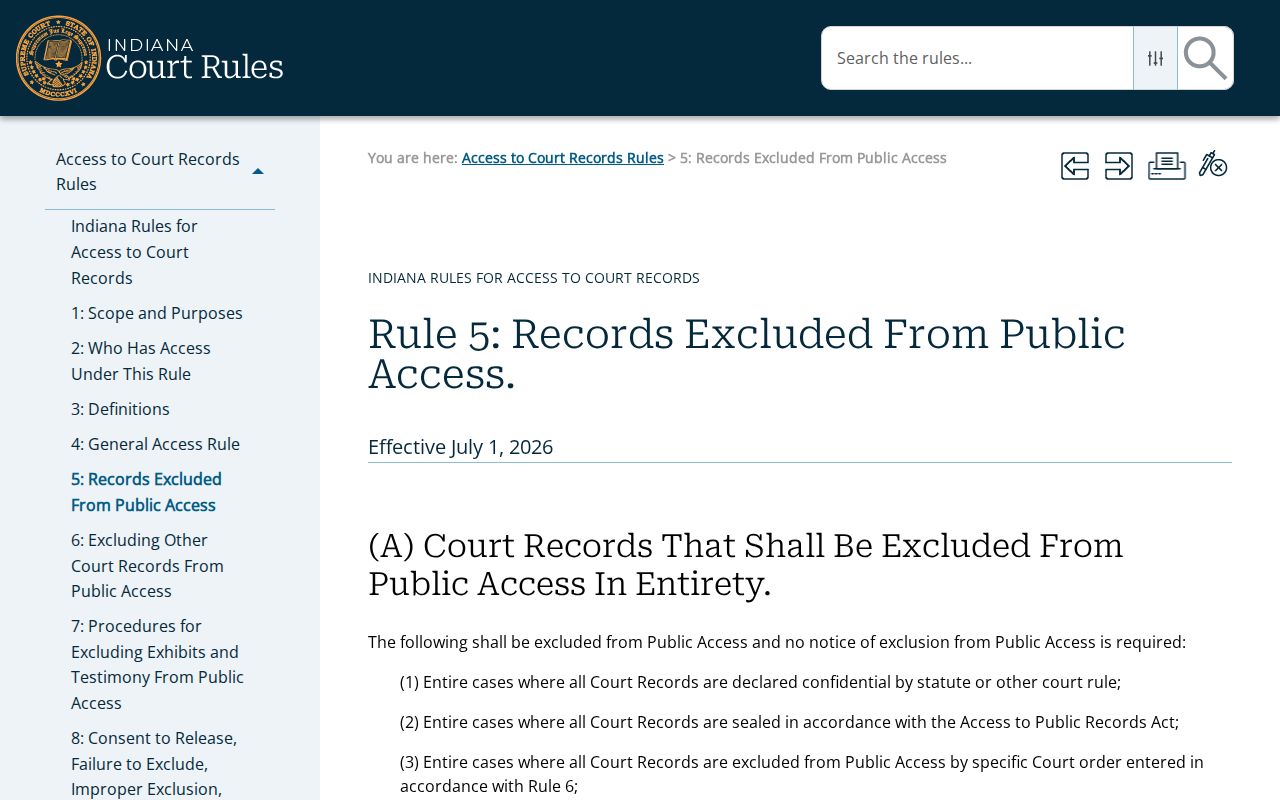
Indiana Court Record Rule 4 presumes public access. Rule 5 then lists what stays out: confidential and sealed matters, juvenile-related material, and investigative requests such as search warrants. An arrest warrant tied to protected material may look thin or missing online in Carroll County even while official agencies act on it. The official Rule 5 source shows exactly where those limits fall.
An empty public search settles nothing. Confirm with the Carroll County Clerk or the court before assuming no warrant exists.
Serving Arrest Warrants in Carroll County
A judge issues the process; law enforcement serves it. The Carroll County Sheriff's Office, Indiana State Police, Delphi Police, Flora Police, or a town marshal may carry it out, depending on jurisdiction and assignment. The sheriff's public site offers no complete active-arrest-warrant database. Its published channels mainly route law-enforcement and custody questions. For nonemergency contact, dispatch runs 24 hours at (765) 564-2413, and administration sits at (765) 822-2166. The Sheriff contact page warns that email is not monitored around the clock and advises against sending sensitive data. After an arrest come booking, an initial court appearance, review of any holds, and a bond decision. None of those outcomes can be promised in advance, because the court and the jail must first review the actual record.
Carroll Court and Booking Records
Court files and jail files answer different questions. The Carroll County Clerk keeps filings and docket events. The sheriff or jail keeps booking, custody, and facility records. Indiana's public-record request guidance sends court-record requests to the court that holds them and local police records to the agency that maintains them. Ask the Clerk when the question is whether the court issued or recalled a warrant. Ask the sheriff when it concerns service, current custody, booking, or jail procedure. The official jail division page links the Indiana County Jail Public Portal, but remember that a jail listing is not the issuing court's warrant record. Querying the right office in Carroll County prevents a false conclusion drawn from a different system.
Comparing Carroll Arrest, Summons, and Bench Warrants
These court tools are not interchangeable. Indiana law may allow a summons instead of an immediate arrest in some cases. A summons simply directs a person to appear voluntarily. Skipping that appearance without good cause can open a later warrant path. A bench warrant usually follows a missed court duty in an existing matter, while an arrest warrant rests on probable cause for custody.
| Process | Direction | Typical basis | Response |
|---|---|---|---|
| Arrest warrant | Take the named person into custody. | Judicial probable-cause finding. | Confirm through counsel and court; plan surrender and bond. |
| Summons | Appear on a stated date. | A charge proceeding without initial custody. | Appear as ordered and keep the paperwork. |
| Bench warrant | Arrest after a missed duty. | Failure to appear or comply. | Ask the issuing court about appearance or recall. |
For missed-hearing process, see the Carroll County bench warrant search.
Carroll Bond Is a Court Decision
Carroll Local Rule LR08-CR00-17 carries the bond schedule Carroll County courts use for eligible charges. Murder has no scheduled bond. Listed felony and misdemeanor levels carry graduated amounts instead. With multiple charges, the most serious one usually sets the figure unless a judge or prosecutor changes it. An officer may ask to disallow it. Separate holds can affect release in Carroll County too. None of this makes the schedule a release promise; the charge level, any court order, hold authority, and judicial review control the actual case. The Sheriff's bond page says internet bonds are no longer accepted, so bond must be handled at the Sheriff's Office, which takes cash and credit cards but not cashier's checks or money orders. Confirm the current amount and method before you travel.
Delphi Police Is a Routing Channel
The Delphi Police page offers a local law-enforcement contact for the city, not a public Carroll County arrest warrant roster.
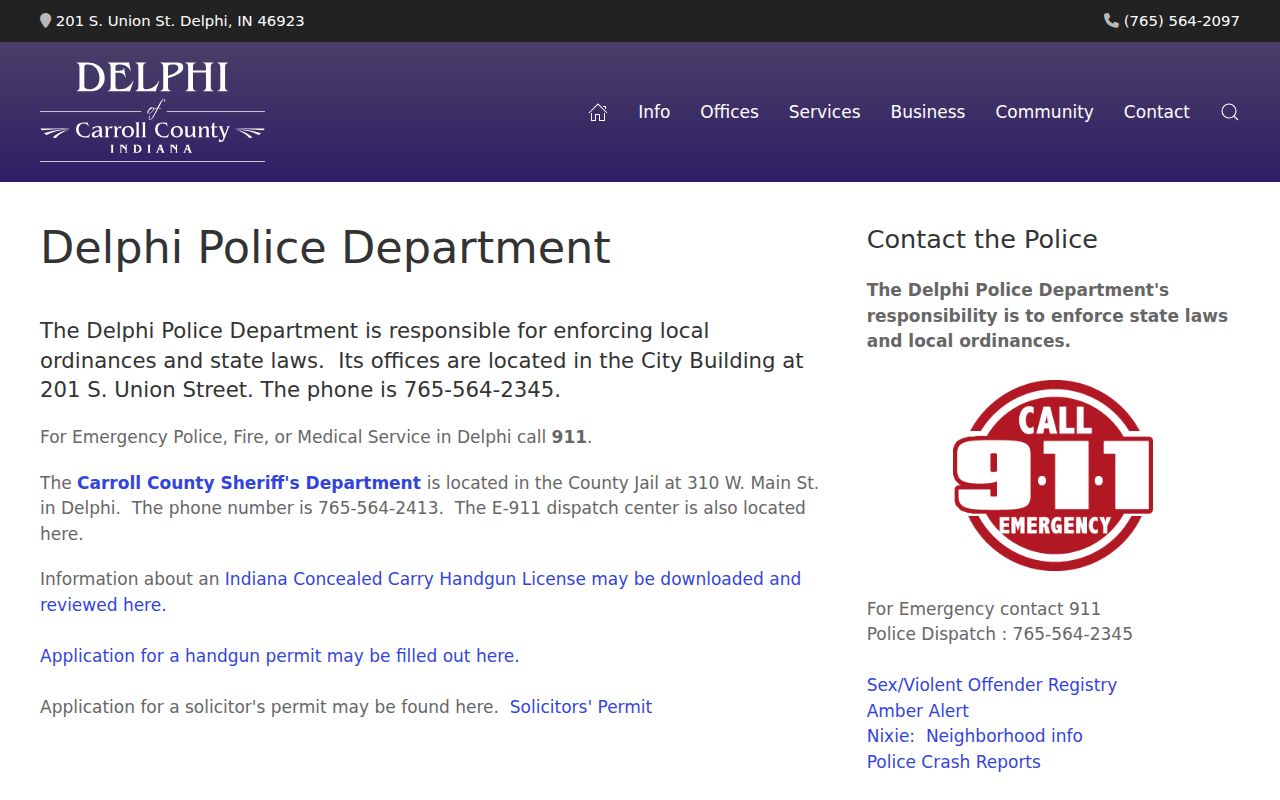
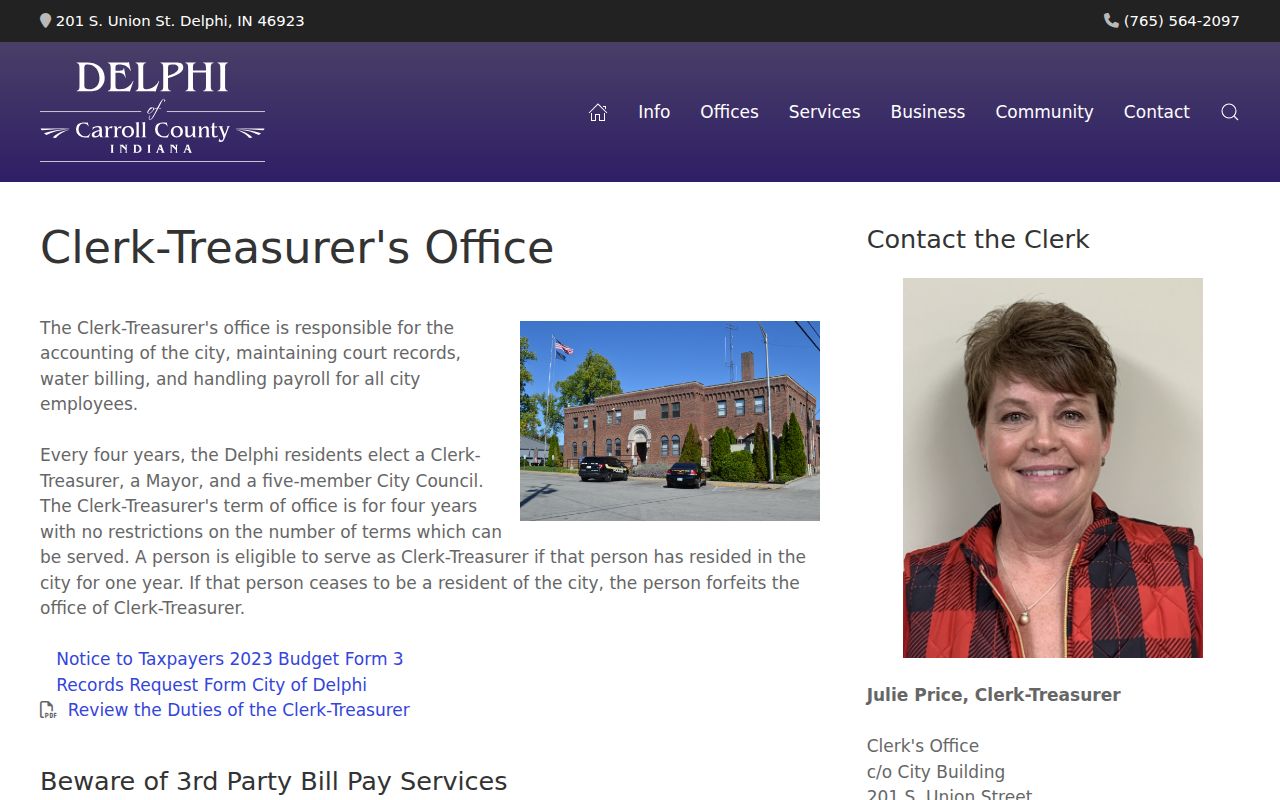
City officers may serve lawful process. Warrant status still comes from the Carroll County Clerk and the issuing court; the Delphi Clerk-Treasurer page covers city records.
The current state directory lists no Delphi City Court. Criminal warrant questions in Carroll County should follow the county route unless an official office says otherwise.
Carroll Hearing Reminders Prevent Misses
Carroll County joins Indiana's Odyssey hearing reminder system. Enroll a phone number through the Clerk. Texts go out five days and one day before each hearing. That prevention helps, but it is not a Carroll County warrant lookup, and it proves nothing about recall.
A reminder lowers the odds of a missed date. It never replaces reading the Carroll County docket or obeying the current order.
If There Is an Arrest Warrant for You
Skip the online name match. Save the cause number and issuing court instead. Then call an attorney or the Carroll County Clerk at (765) 564-4485 for current court status. Ask whether the warrant is active. Ask whether an appearance is required and whether the court set bond or another hold. A lawyer can explain the order and seek a recall or other relief when that fits the case.
- Locate the eligible MyCase record and note its court, cause number, and newest event.
- Confirm present status with the Clerk or issuing court. Do not send sensitive details through ordinary email.
- Discuss voluntary surrender, recall, bond, and timing with counsel before going to law enforcement.
- If bond applies, verify the amount and accepted method with the court or Sheriff's Office.
- After a hearing, surrender, or order, obtain current confirmation that the warrant was recalled or served.
Important: A public record does not guarantee same-day release. Follow the issuing court's instructions and get legal advice before taking action.
The Carroll County warrant records overview connects court, sheriff, and resolution routes.